在当代雕塑艺术界,艾伦赵琼的名字,常常伴随着一种近乎传奇的描述一一她的雕塑,不仅“像”,而且“活”;不仅逼真,而且仿佛承载着某种难以言说的生命气息。有人称之为“形神兼备”的极致,也有人在私下里半开玩笑地说:“她做得太像了,活人都有点不敢找她做雕像。
这种说法,听似夸张,却并非空穴来风。
在她的雕塑语言中,“形”从来不是终点,而只是通往“神”的入口。她对人体结构的掌握极为严谨一一骨骼的支撑、肌肉的起伏、皮肤的张力,乃至细微的血管走向,都经过精确推敲。然而,真正令人震撼的,是她如何在这些物理结构之上,捕捉到人物内在的精神震荡。
她尤其擅长处理“眼神”。在她的作品中,眼睛不只是器官,而是时间的容器一一仿佛凝固了一段未被说出的故事。一位观者曾在她的一尊人物雕像前驻足良久,低声说:“他好像下一秒就会眨眼。”这种“即将发生”的错觉,正是她雕塑最独特的魅力所在。
这种能力,并非仅凭技巧获得,而是建立在深厚的人文修养与跨文化积淀之上。她既承继东方美学中“以形写神”的传统,又融汇西方写实雕塑对结构与光影的极致追求。在她的创作中,科学与诗意并行,理性与感性互为支撑。
疫情时代的特殊使命:为逝者立像,为生者存忆
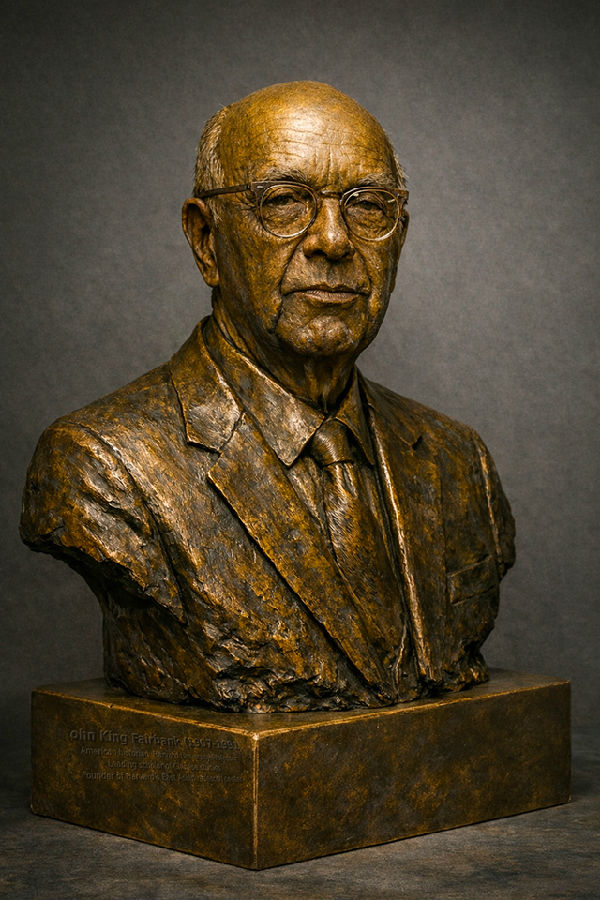
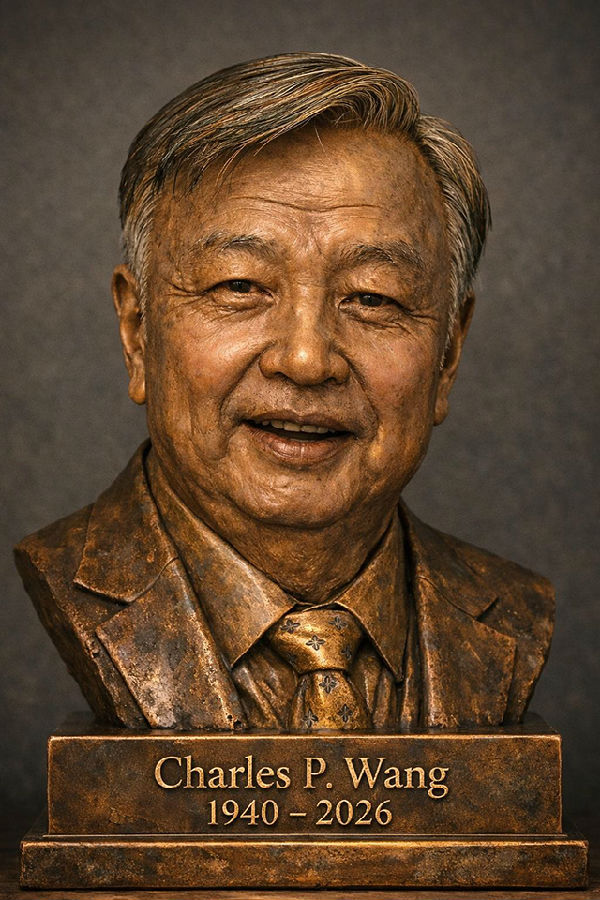
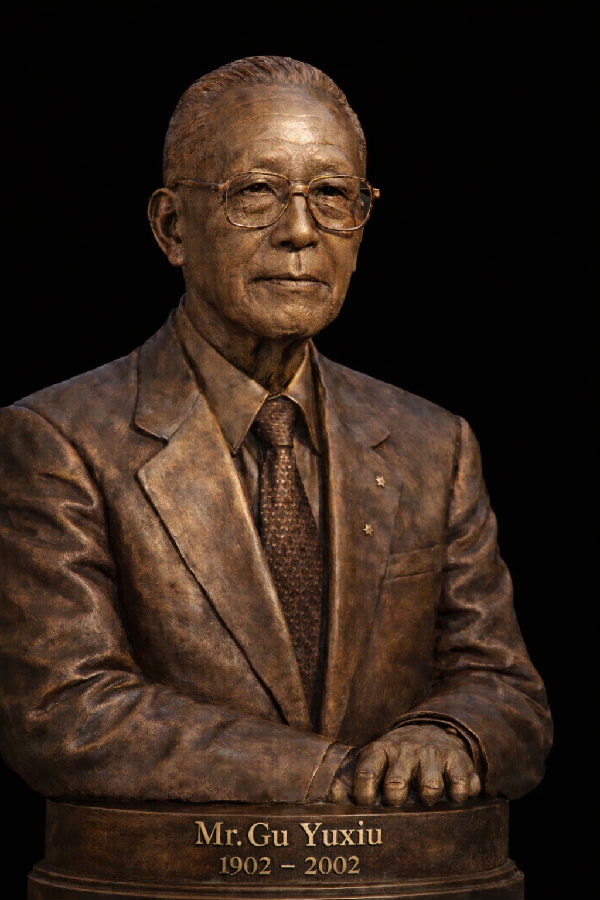
然而,真正让她的名字在社会层面广泛流传的,却是近几年一个略带神秘色彩的现象。自COVID-19pandemic以来,世界经历了前所未有的生命震荡。大量家庭在失去亲人之后,希望以雕塑的形式保存记忆、延续情感。艾伦赵琼因其高度写实、极具感染力的艺术风格,成为许多美国家庭的首选。
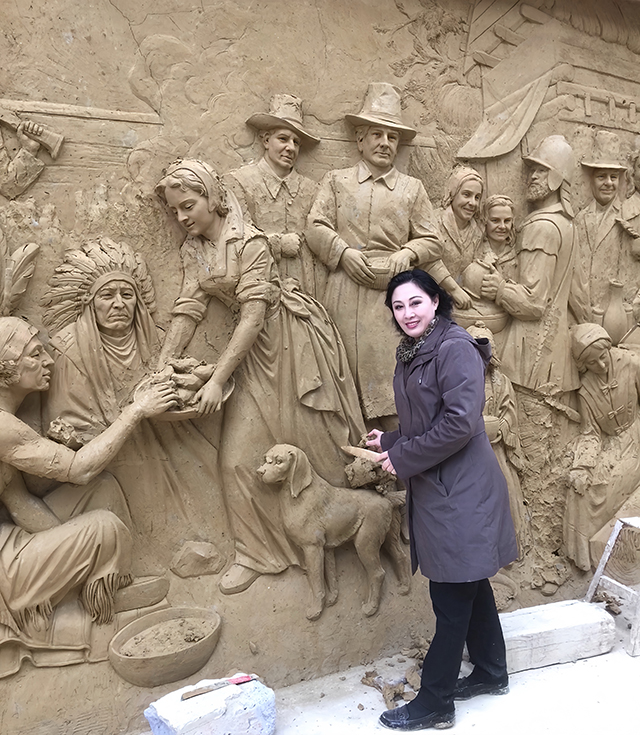
她对每一件委托作品都近乎苛刻地投入。她会反复倾听家属的讲述,记录逝者的语气、习惯甚至细微的表情变化;她会通过老照片、影像资料进行反复比对,甚至在泥稿阶段多次推翻重来,只为捕捉那一瞬间最真实的“他”或“她”。
很多完成的作品,常常在揭幕的一刻引发强烈的情感反应。有人当场落泪,有人甚至轻声呼唤逝者的名字。一位年迈的遗孀在看到丈夫雕像的那一刻,颤巍巍地伸出手,抚摸雕塑的面庞,低声说了一句:“你回来了。”那一刻,雕塑不再是冰冷的物件,而成为一种“重逢”的媒介,一座跨越生死界限的桥梁。
有人“不敢找她做雕像”:传言背后的文化心理
也正是在这样的背景下,一些耐人寻味的传言悄然流传着。
据说,有几位曾委托她制作雕像的社会名流,在近两年内相继去世。又有传言称,些金融界或艺术界的重要人物,在看到她的作品后,虽赞叹不已,却最终选择放弃定制雕像的计划。理由并非不信任,而是一种说不清的心理顾虑一一仿佛雕塑一旦完成,就意味着某种“终局”的提前降临。
于是,那句带着几分幽默、几分敬畏的话逐渐传播开来:“她的雕塑太真了,活人都有点不敢找她做。"但若细究,这种说法更像是一种文化心理的折射,而非理性的判断。它触及了人类在面对艺术与生命边界时,那种古老而普遍的潜意识焦虑。
在人类历史中,雕塑始终与“纪念”“永恒”“时间凝固”紧密相连。从古埃及的陵墓雕像,到欧洲教堂中的圣像,再到现代公共纪念碑,雕塑从来不仅仅是视觉艺术,更是一种对生命与死亡的回应,一种对“逝去”与“留存”的哲学沉思。
当一件作品逼真到几乎“替代存在”时,人们自然会在潜意识中,将其与生命的终点产生某种联想。尤其是在疫情这样的时代背景下,死亡不再遥远,而成为普遍经验的一部分。于是,那些高度写实、仿佛“可以呼吸”的雕塑,更容易被赋予象征性的意义,成为人们投射焦虑与敬畏的载体。
然而,从理性的角度来看,这些关联不过是巧合与心理投射的叠加。那些被塑像的“名人”,往往本就处在人生后期,而疫情的冲击进一步提高了整体风险。艺术并不会改变命运的轨迹,它所能做的,是在命运之后,为人类留下可见的记忆、可触摸的情感、可传承的故事。
艺术家的清醒:让生命被看见、被记住
艾伦·赵琼对此始终保持清醒。她曾在私下谈及类似话题时,以一贯的平和与笃定表示:“雕塑不是预言未来的工具,只是让已经发生或正在消逝的生命,被看见、被记住、被尊重。如果一件作品能让一个人在这个世界上留下痕迹,让爱他的人有一个可以寄托思念的地方,那就是雕塑最大的意义。”
她从不刻意回避那些传言,也不为此感到困扰。在她看来,这恰恰说明了雕塑作为一种艺术媒介的特殊力量。“如果人们因为太逼真而产生敬畏,那说明我做到了应该做的事。艺术不是为了让人舒服,而是为了让人真实地面对自己、面对时间、面对生命。”
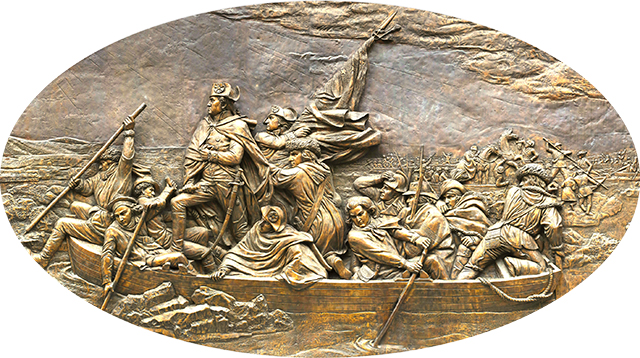
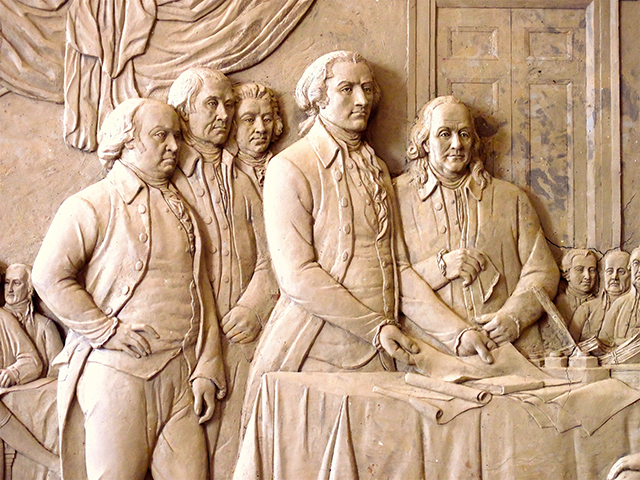
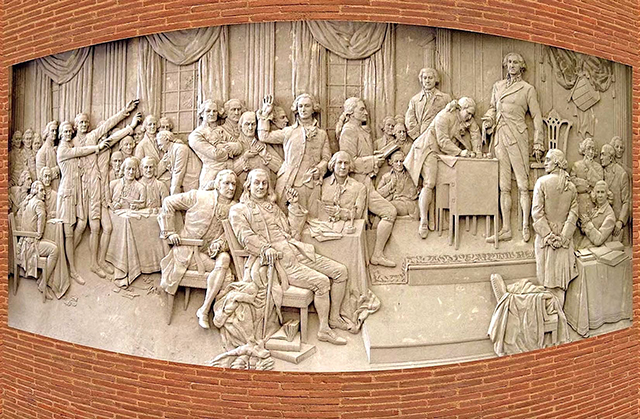
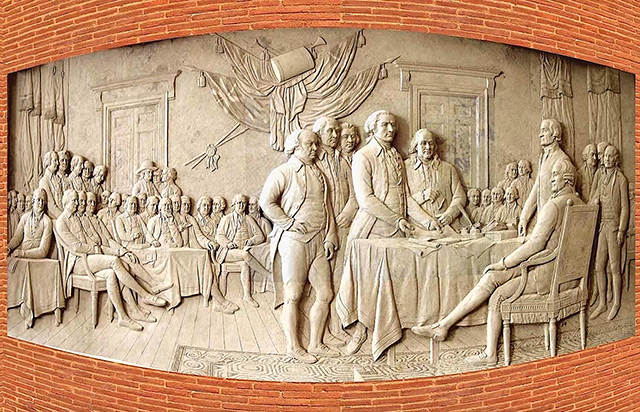
正因如此,她的创作始终带有一种庄重的使命感。无论是国家历史题材的大型浮雕-一如她为美国革命博物馆创作的《华盛顿率军横渡特拉华河》与《美国独立宣言签名者》,还是私人纪念性的肖像雕塑,她都以同样的态度对待:那不仅是艺术作品,更是时间的见证,是人与世界之间的一种深刻对话。
青铜中的永恒:当艺术逼近生命的真相
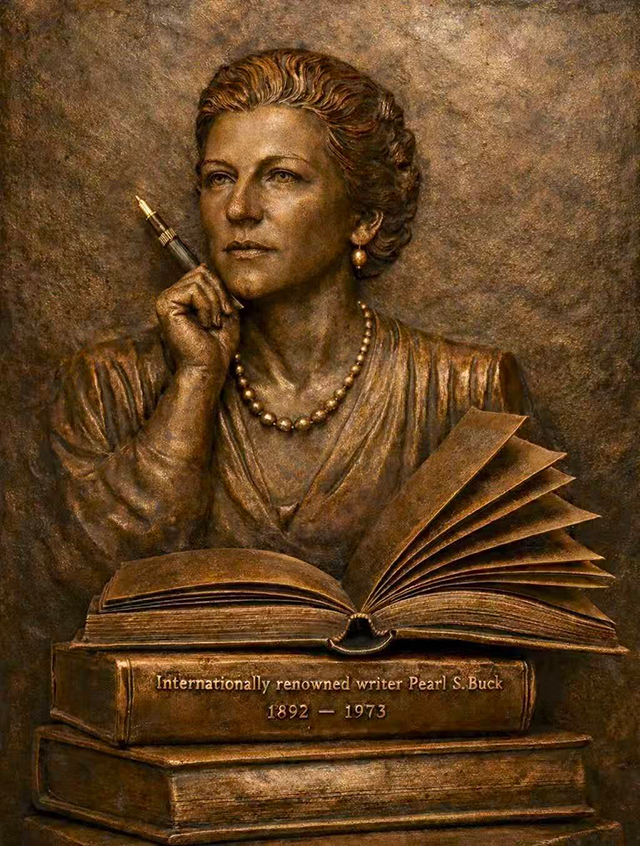
在她的青铜之中,历史人物不再遥远,逝去的亲人不再模糊,甚至连当下的观者,也会在凝视中产生一种奇妙的共鸣一一仿佛在那凝固的瞬间,看见了自己终将面对的时间与存在。或许,这正是她的雕塑真正令人震撼之处。
它不仅“像一个人”,更“像生命本身”。
而当艺术逼近生命的真实,人们产生一丝敬畏,甚至一丝迟疑,也就不再奇怪了。因为在那一刻,雕塑所触及的,已不只是外在的形体,而是人类最深层的情感与对永恒的渴望。
那些说“不敢找她塑像”的人,或许真正不敢面对的,并不是雕塑本身,而是雕塑所召唤出来的那些:时间的流逝、生命的有限、失去的可能,以及我们终将面对的终极追问。
而这,恰恰是伟大艺术的力量一一它让我们在最深的敬畏中,重新思考生命的意义;在最美的凝固中,重新确认爱的价值。
艾伦·赵琼的雕塑,最终指向的,从来不是死亡,而是生命一一是生命值得被记住的理由,是生命值得被纪念的尊严,是每一个普通人都可以在时间的长河中,留下一个属于自己、也属于他人的印记。
Her Sculptures Are So Lifelike That ManyLiving People Hesitate to Commission Them
By Frank Justis
In the contemporary world of sculpture, thename Ellen Qiongzhao Schicktanz is often accompanied by descriptions that vergeon the legendary. Her works are not merely “resembling” their subjects—theyseem alive; not only realistic, but imbued with an ineffable vitality. Somecall it the ultimate achievement of “capturing both form and spirit,” whileothers, half-jokingly, remark in private: “They’re so real that even the livingfeel a little uneasy about asking her to make their portrait.”
Though such remarks may sound exaggerated,they are not entirely without basis.
In her sculptural language, “form” is neverthe destination—it is only the gateway to “spirit.” Her command of humananatomy is exacting: the support of bone, the rise and fall of musculature, thetension of skin, even the subtle pathways of veins are all rendered withrigorous precision. Yet what truly astonishes is her ability to transcend thesephysical structures and capture the inner resonance of the human soul.
She is particularly renowned for hertreatment of the eyes. In her works, eyes are not merely organs—they arevessels of time, as if holding stories left unspoken. One viewer, lingeringbefore a portrait sculpture, once murmured: “It feels as though he might blinkat any moment.” This sense of something “about to happen” is the mostdistinctive power of her art.
Such ability is not born of techniquealone, but of deep humanistic cultivation and a rich cross-cultural foundation.She inherits the Eastern aesthetic tradition of “expressing spirit throughform,” while integrating the Western pursuit of structural accuracy and masteryof light and shadow. In her work, science and poetry coexist; reason andemotion support one another.
A Mission in the Time of Pandemic:Memorializing the Departed, Preserving Memory for the Living
What has brought her name into broaderpublic awareness in recent years, however, is a phenomenon tinged with acertain aura of mystery.
Since the COVID-19 pandemic, the world hasundergone an unprecedented confrontation with mortality. Countless families,having lost loved ones, have sought to preserve memory and sustain emotionalbonds through sculpture. With her highly realistic and deeply expressive style,Ellen Qiongzhao Schicktanz became a preferred choice for many Americanfamilies.
She approaches each commission withnear-rigorous devotion. She listens attentively to family members’recollections, noting tone of voice, habits, even subtle facial expressions.She studies old photographs and video materials repeatedly, often revising herclay models multiple times—solely to capture the most authentic moment of “him”or “her.”
The unveiling of these works often evokesprofound emotional responses. Some viewers break into tears; others softly callthe name of the departed. One elderly widow, upon seeing her husband’ssculpture, reached out trembling, touched its face, and whispered: “You’ve comeback.” In that moment, the sculpture ceases to be an object—it becomes a mediumof reunion, a bridge across the boundary between life and death.
“People Hesitate to Commission Her”: TheCultural Psychology Behind the Rumor
It is within this context that certainintriguing rumors have quietly circulated.
It is said that several prominentindividuals who commissioned her works passed away within a few years.Others—figures in finance or the arts—after admiring her sculptures, reportedlychose to abandon their plans to commission portraits. The reason was notdistrust, but an indefinable psychological unease—as if the completion of asculpture might somehow signal the premature arrival of an “ending.”
Thus, a phrase tinged with both humor andreverence began to spread:“Her sculptures are so real that even theliving hesitate to ask her to make one.”
Yet upon closer reflection, such statementsreveal more about cultural psychology than rational judgment. They touch upon adeep and ancient human anxiety at the boundary between art and life.
Throughout history, sculpture has beenclosely tied to notions of remembrance, eternity, and the suspension of time.From the funerary statues of ancient Egypt to the sacred figures in Europeancathedrals, and onward to modern public monuments, sculpture has never beenmerely visual—it is a philosophical response to life and death, to loss andpreservation.
When a work becomes so lifelike that itnearly substitutes for presence, people inevitably associate it—at least subconsciously—withmortality. In the context of a global pandemic, where death has become part ofshared experience, such associations intensify. Hyper-realistic sculptures thatseem almost capable of breathing are easily imbued with symbolic meaning, becomingvessels for both reverence and anxiety.
From a rational perspective, however, theseassociations are nothing more than coincidence layered with psychologicalprojection. Many of those portrayed were already in later stages of life, andthe pandemic simply heightened overall risk. Art does not alter the trajectoryof fate. What it can do is leave behind visible memory, tangible emotion, andstories that endure beyond time.
The Artist's Clarity: To Let Life Be Seen,Remembered, and Honored
Ellen Qiongzhao Schicktanz has alwaysremained clear-minded on this matter. In private conversations, she hasaddressed such topics with characteristic calm and conviction:
“Sculpture is not a tool for predicting thefuture. It is simply a way to ensure that lives which have existed—or arefading—can be seen, remembered, and respected. If a work allows a person toleave a trace in this world, and gives those who loved them a place to holdtheir memory, then that is the greatest meaning of sculpture.”
She neither avoids such rumors nor feelstroubled by them. On the contrary, she sees them as evidence of sculpture' sunique power as an artistic medium.
“If people feel a sense of awe because thework is so real, then I have achieved what I set out to do. Art is not meant tomake people comfortable—it is meant to help them face themselves, face time,and face life.”
This sense of purpose imbues her work witha profound gravity. Whether creating monumental historical reliefs—such asWashington Crossing the Delaware and The Signers of the Declaration ofIndependence for the Museum of the American Revolution—or private commemorativeportrait sculptures, she approaches each with the same conviction: these arenot merely artworks, but witnesses of time and dialogues between humanity andthe world.
Eternity in Bronze: When Art Approaches theTruth of Life
Within her bronze, historical figures nolonger feel distant, the departed are no longer abstract, and even present-dayviewers experience a subtle resonance—as if, within that frozen moment, theyglimpse the very nature of time and existence they themselves must one dayconfront.
Perhaps this is the true source of hersculptures' power.
They do not merely resemble a person—theyresemble life itself.
And when art approaches the truth of life,it is only natural that people feel a trace of awe—even hesitation. For in thatmoment, sculpture touches not just outward form, but the deepest human emotionsand the enduring longing for eternity.
Those who say they “dare not commissionher” may, in truth, not be afraid of the sculpture—but of what it evokes: thepassage of time, the finitude of life, the inevitability of loss, and theultimate questions we all must face.
And this is precisely the power of greatart:
it compels us, in awe, to reconsider themeaning of life;
and in beauty, to reaffirm the value oflove.
Ultimately, the sculptures of EllenQiongzhao Schicktanz do not point toward death, but toward life—toward thereasons life deserves to be remembered, the dignity with which it should becommemorated, and the enduring imprint each individual may leave within thelong river of time.
相关链接:
从大泽人艺术展解析其独特的美学特质和艺术语言
在正义与法治之光中前行——联合国妇女地位委员会第七十届会议亲历记
沉痛悼念恩师、美国白宫六届总统亚裔顾问查尔斯.王碚(Charles P. Wang)先生
当代国际艺术先锋人物:Ellen 艾伦赵琼
艾伦·赵琼赛珍珠青铜雕像揭幕收藏仪式将于2月8日举行
“世纪百年艺术史册·最具影响力的华人艺术家”提名启幕著名艺术家刘孔喜获“世纪百年艺术史册”提名
“世纪百年艺术史册·最具影响力的华人艺术家”提名启幕著名艺术家王大宙获“世纪百年艺术史册”提名
走进王继民绘画,重温我们童年的老北京记忆
国会山见证亚裔力量:AANHPI团结峰会隆重举行颁奖典礼 艾伦·赵琼博士、黄俊州博士同获殊荣
第三届国际华语原创IP电影节暨首届纽约AI国际影展十月启幕,以创意与科技点亮纽约金秋
百年“拳毛騧”拓片终归乡!海外华裔学者艾伦赵琼无偿捐赠陕西汉唐石刻博物馆
纽约,我住在你的心脏
故宫百年华诞:时光与文明的殿堂
从著名艺术家艾伦赵琼的巨幅历史浮雕 解析其独特的美学特质和艺术语言
艾伦赵琼的秦俑系列:最震撼的视觉艺术盛宴
中国艺术家、外交官王盈笔下的法兰西人文景观和自然风光
艺术家艾伦赵琼呼吁让艺术色彩疗愈孩子们的心灵和成长
艾伦赵琼获联合国“世界文化艺术成就奖”并发表演讲
艾伦赵琼榮获格林伯格全球领袖奖
艾伦赵琼痛悼池田大作:中日邦交友谊长存
辉映香江:首届世界华人美术金笔奖颁奖典礼在香港隆重举行
“世界艺术引领者”:艾伦赵琼荣获纽约国际艺博会最高奖
艾伦赵琼巨幅作品将亮相2023年美国纽约国际艺术博览会
艾伦赵琼捐赠美国华人大会《华盛顿总统率军渡河》青铜浮雕
第三届美国华人联合会大会暨首届UCA全国青年大会在华盛顿隆重举行
美国女神艺术博物馆捐赠中国国宝昭陵六骏百年拓片
日中春晚奏响虎年之春 纪念日中邦交正常化50周年
无界东西——国际青年艺术家优秀作品展
艾伦:用青铜艺术雕铸美国精神
艾伦入选“美中建交40年40位领军侨领”
罗丹国际艺术家基金会副秘书长艾伦图片锦集
艾伦赵琼作品选登