纪念联合国世界文化多样性宣言发布25周年活动2026年5月21日于纽约下城华尔街金融区亚洲厨艺学院举行。美国联邦中小企业署原国家顾问、联合国文化多元性会议副主席暨美国250周年纪念活动组委会共同主席、肖邦音乐大学亚洲学院董事局主席王鹏飞博士作了书面发言。他指出,文化多样性是文明存续的根基,也是艺术创新的源泉。音乐作为无国界的语言,是文化交流最鲜活、最直接的载体。近年来,波兰肖邦音乐大学携手肖邦国际教育集团,以 “传承肖邦精神、搭建亚洲音乐桥梁、促进文化多元共生” 为使命,推动肖邦音乐大学亚洲学院教育合作项目在马来西亚、中国香港、中国澳门、中国海南四地落地深耕,构建起覆盖东南亚与中国粤港澳大湾区、海南自贸港的国际化音乐教育网络,以实际行动践行《宣言》精神,书写文化多样性的生动实践。经授权 ,美中时报刊发王鹏飞博士发言全文,与大家分享:
尊敬的各位来宾、各位同仁:
大家好!
今天,我们齐聚一堂,共同庆祝联合国教科文组织《世界文化多样性宣言》(以下简称《宣言》)发布 25 周年。25 年前,2001 年 11 月 2 日,联合国教科文组织第 31 届大会在巴黎通过这份具有里程碑意义的文件,明确提出“世界文化多样性是人类的共同遗产,文化对话是和平的最佳保障”,为全球化时代的文明交流互鉴奠定了核心准则。25 年来,这份宣言如明灯般指引着全球文化领域的合作方向,推动不同文明从隔阂走向对话、从冲突走向融合,成为守护人类精神家园的重要基石。
文化多样性是文明存续的根基,也是艺术创新的源泉。音乐作为无国界的语言,是文化交流最鲜活、最直接的载体。波兰国立肖邦音乐大学,自 1810 年建校以来,承载着 216 年的音乐教育积淀,是欧洲古典音乐教育的重镇,更是东西方音乐文化交融的践行者。近年来,波兰肖邦音乐大学携手肖邦国际教育集团,以 “传承肖邦精神、搭建亚洲音乐桥梁、促进文化多元共生” 为使命,推动肖邦音乐大学亚洲学院教育合作项目在马来西亚、中国香港、中国澳门、中国海南四地落地深耕,构建起覆盖东南亚与中国粤港澳大湾区、海南自贸港的国际化音乐教育网络,以实际行动践行《宣言》精神,书写文化多样性的生动实践。
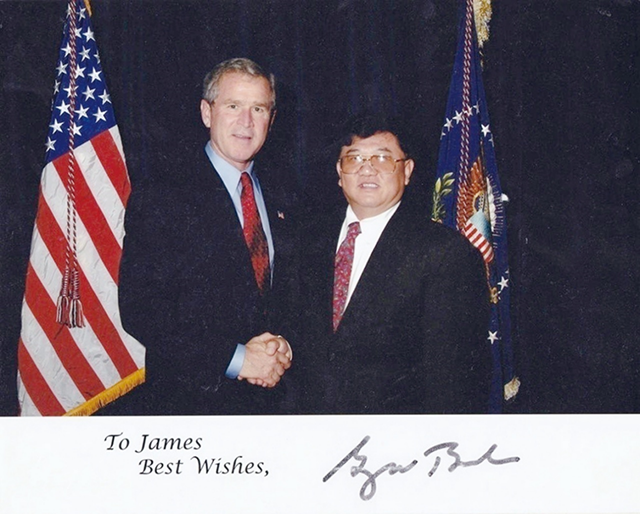
2004年7月25日,在华盛顿DC希尔顿大酒店,白宫亚太顾问委员会主席祖炳民教授宣布George布什总统任命James王为美国联邦中小企业署国家顾问,George布什总统接见了James王并一起合影。
当天参加活动的近百人,其中,美国华人共和党委员会主席一起参加活动。
一、时代回响:《世界文化多样性宣言》的核心要义与当代价值
25 年前,《宣言》的诞生绝非偶然。彼时,全球化浪潮加速推进,文明碰撞与文化冲突的隐忧逐渐显现,部分声音鼓吹 “文明冲突论”,割裂人类文明的整体性。在此背景下,联合国教科文组织凝聚全球共识,通过《宣言》明确三大核心要义:一是文化多样性是人类共同遗产,具有不可替代的价值;二是文化权利是基本人权,各文明平等发展、互学互鉴;三是文化对话是和平保障,反对文明霸权与文化隔绝。
25 年后的今天,世界格局深刻变革,单边主义、文化霸权仍有抬头,文明隔阂与误解时有发生,《宣言》的价值愈发凸显。文化多样性不是文明对立的借口,而是文明共生的底气;不是文化封闭的壁垒,而是文化创新的沃土。在全球化与数字化交织的时代,守护文化多样性,就是守护人类文明的创造力与生命力;推动文明交流互鉴,就是构建人类命运共同体的文化根基。
音乐,作为跨越语言、地域、民族的艺术形式,天然承载着文化交流的使命。肖邦音乐大学以肖邦音乐为纽带,深耕亚洲市场,推动音乐教育合作,正是对《宣言》精神的深度践行 —— 以音乐打破隔阂,以教育传递文明,以多元共筑未来,让不同文化在交流中互鉴、在融合中共生。
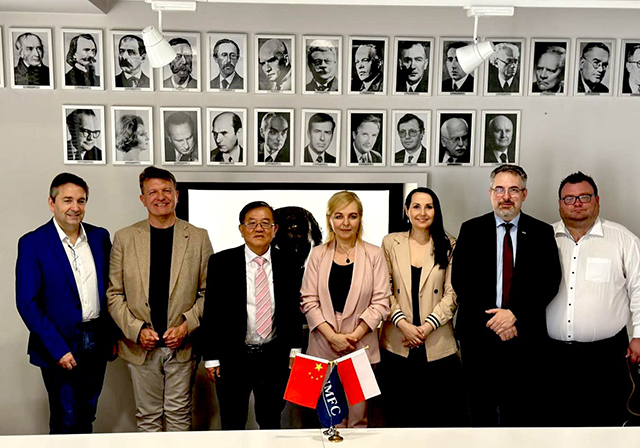
从左至右:Zdunikowski教授,Strahl教授(校长),王鹏飞博士,Lawrynowcz-Just教授(副校长),Justyna教授,Baran教授(前校长),Grząka教授(王鹏飞博士同波兰肖邦音乐大学校长Strahl 原校长巴兰教授等合影)
二、深耕亚洲:肖邦音乐大学亚洲学院的布局与核心定位
波兰国立肖邦音乐大学,作为波兰最古老、规模最大的音乐学院,拥有 216 年办学历史,在钢琴、小提琴、声乐、作曲等领域享誉全球,培养出无数世界级音乐大师。2023 年起,肖邦音乐大学正式启动亚洲战略,联合肖邦国际教育集团,共同创办肖邦音乐大学亚洲学院,原肖邦音乐大学校长巴兰教授担任亚洲学院院长兼教授委员会主席,肖邦国际教育集团主席王鹏飞博士担任董事局主席兼国际合作委员会主席,构建起 “波兰本部学术引领、亚洲属地运营落地” 的双轨管理模式。
亚洲学院的核心定位清晰明确:以肖邦音乐教育为核心,搭建东西方音乐文化交流桥梁;以国际化课程体系为支撑,培养兼具全球视野与本土文化素养的音乐人才;以多元文化活动为载体,推动波兰与亚洲各国文化深度交融,践行文化多样性理念。基于此定位,亚洲学院精准布局马来西亚、中国香港、中国澳门、中国海南四地,形成 “东南亚枢纽 + 中国核心区” 的协同发展格局,兼顾区域辐射与本土深耕,实现教育资源互补、文化交流联动。
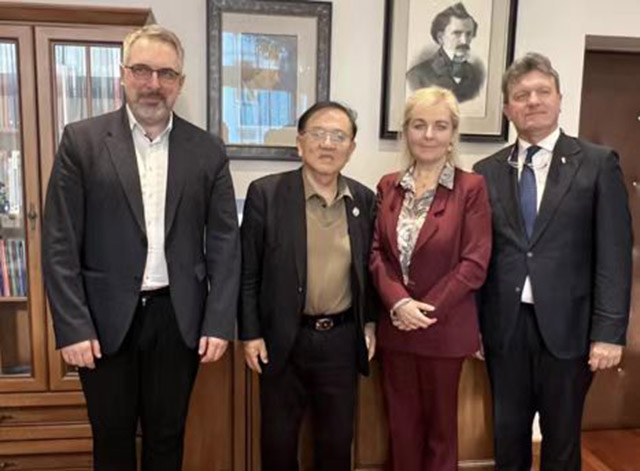
(左一)肖邦音乐大学原校长,现任肖邦音乐大学亚洲学院院长巴兰教授。(左二)肖邦音乐大学亚洲学院董事局主席王鹏飞博士。(左三)肖邦音乐大学校长斯特拉尔教授。(左四)肖邦音乐大学副校长拉夫里诺维奇-尤斯特教授。
1/28/25于波兰华沙,肖邦音乐大学校长办公室
三、四地同心:亚洲学院四大项目的推进成果与实践亮点
(一)马来西亚吉隆坡校区:东南亚音乐教育枢纽,国际招生与赛事核心
马来西亚吉隆坡,作为东南亚文化交融的核心城市,是肖邦音乐大学亚洲学院的总部所在地,也是亚洲学院国际化办学的核心枢纽。2023 年启动筹备,重点承担东南亚区域人才培养、国际赛事举办、师资交流培训三大核心职能。
在人才培养方面,吉隆坡校区开设钢琴、小提琴、大提琴、手风琴、声乐、舞蹈六大核心专业,覆盖本科、硕士两个学位层次,全部采用波兰本部同源课程体系,由波兰本部教授与亚洲本地资深师资联合授课,实现 “欧洲标准、亚洲适配”。
在区域辐射方面,吉隆坡校区依托东南亚地理优势,与马来西亚当地音乐学院、艺术机构建立深度合作,开展师资互访、联合演出、学术研讨等活动,推动波兰音乐文化在东南亚的传播,同时吸纳东南亚多元音乐元素融入教学,丰富课程体系,践行文化多样性理念。
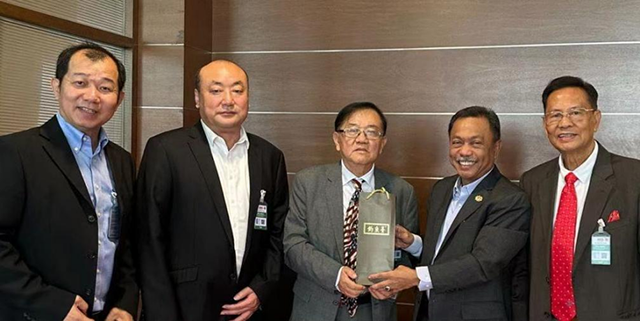
马来西亚总理府顾问、肖邦音乐大学亚洲学院高级顾问:萨马德拿督
(右二)马来西亚高教部常务副部长:阿普 达尔拿督
(中间)王鹏飞博士,肖邦音乐大学亚洲学院董事局主席
(左一)马来西亚肖邦教育机构联合创办人高级副主席 Kok Chee Kheong
(左二)马来西亚肖邦教育机构高级副主席Luke Liang
(二)中国香港项目:国际文化交流窗口,高端音乐活动与人才孵化
中国香港,作为国际金融与文化交流中心,兼具中西文化交融的独特优势,是亚洲学院对接国际、链接内地的重要窗口。2023 年 4 月,肖邦音乐大学校长巴兰教授一行到访香港,考察香港文化环境与艺术教育资源,正式启动香港项目合作。香港项目聚焦 “高端文化交流、国际音乐活动、精英人才孵化” 三大方向,打造亚洲学院在粤港澳大湾区的文化标杆。
在高端交流方面,亚洲学院与香港演艺学院、香港中文大学音乐系等顶尖院校建立合作关系,定期举办 “肖邦音乐大师课”“中欧音乐学术论坛”,邀请波兰本部世界级教授赴港授课、开展学术研讨,推动中欧音乐教育理念碰撞与融合。2023 年至 2025 年,已累计举办12 场大师课、4 场学术论坛,覆盖香港及内地音乐师生、艺术从业者超 2000 人次,成为香港中西音乐文化交流的重要平台。
在赛事联动方面,2024 年 3 月,首届肖邦音乐大学亚洲国际音乐节香港赛区成功举办,作为音乐节重要赛区之一,吸引香港及周边地区 500 余名选手参赛,决赛与海南赛区联动,共同呈现古典音乐盛宴。香港赛区依托国际城市优势,邀请国际知名音乐家担任评委,提升赛事国际化影响力,同时为香港青少年提供对接国际标准的音乐展示平台,助力音乐人才成长。
在人才孵化方面,香港项目聚焦高端音乐人才培养,开设 “肖邦精英培养计划”,选拔香港及内地优秀青少年音乐人才,提供波兰本部教授一对一指导、国际赛事参赛机会、波兰留学直通车等专属资源,打通 “培养 — 参赛 — 留学” 全链条,为亚洲培养顶尖音乐人才。
(三)中国澳门项目:中葡文化融合平台,特色音乐教育与文旅联动
中国澳门,作为中葡文化交融的独特城市,拥有深厚的历史文化底蕴与丰富的艺术资源,是亚洲学院推动中葡文化交融、音乐教育与文旅融合的重要载体。2023 年 4 月,肖邦音乐大学校长巴兰教授一行到访澳门,考察澳门艺术场馆、教育机构及文旅资源,与澳门文化局、澳门理工大学等机构达成合作意向,正式启动澳门项目。
澳门项目核心定位为 “中葡音乐文化交流平台、特色音乐教育基地、文旅融合示范项目”,依托澳门中葡文化交融优势,打造差异化音乐教育与文化交流体系。在文化交流方面,亚洲学院与澳门文化局联合举办 “中葡音乐文化节”,邀请波兰、葡萄牙、中国内地及澳门音乐家同台演出,融合古典音乐、中葡传统音乐元素,展现多元文化魅力,推动中葡文化深度交融。2024 年、2025 年已连续举办两届,成为澳门重要的国际文化品牌活动。
在特色教育方面,澳门项目开设 “中葡音乐特色课程”,将波兰古典音乐、葡萄牙传统音乐、中国传统音乐元素融入教学,培养学生多元文化音乐素养,打造独具澳门特色的音乐教育体系。同时,依托澳门高校资源,开展音乐教育专业合作,推动学分互认、师资共享,提升澳门音乐教育国际化水平。
在文旅融合方面,澳门项目结合澳门文旅产业优势,打造 “音乐 + 文旅” 融合产品,组织音乐学子参与澳门文旅演出、艺术展览等活动,推动音乐教育与文旅产业深度融合,助力澳门打造 “文化艺术之都”,同时为音乐人才提供实践平台,实现教育与产业双赢。
(四)中国海南项目:自贸港国际教育高地,亚洲学院中国主校区与音乐节总部
中国海南,作为中国唯一的自由贸易港,享有国际教育创新岛政策红利,是亚洲学院布局中国、辐射亚太的核心主校区,也是亚洲国际音乐节的总部所在地。2023 年 5 月 23 日,波兰国立肖邦音乐大学(海南)亚洲分院项目在海南澄迈正式签约落地,标志着亚洲学院中国主校区正式启动建设;2023 年 6 月 7 日,波兰华沙肖邦音乐大学举办新闻发布会,宣布首届肖邦音乐大学亚洲国际音乐节总部落户海南,形成 “教育 + 赛事” 双核心布局。
海南项目核心定位为 “肖邦音乐大学亚洲学院中国主校区、亚太音乐教育中心、国际音乐赛事总部、文化多元融合示范基地”,依托海南自贸港政策优势、区位优势与文旅资源,打造国际化、专业化、特色化的音乐教育与文化交流平台。
在人才培养方面,海南主校区将开设钢琴、小提琴、大提琴、声乐、作曲、音乐教育等核心专业,采用波兰本部同源课程体系与教学标准,由波兰本部教授、国际知名音乐家、国内资深音乐教师组成师资团队,实现 “欧洲标准、中国实践”。同时,依托海南自贸港政策优势,开展国际化办学试点,推进中外学分互认、学位互授联授,打造中国音乐教育对外开放新高地。
在文化融合方面,海南项目深度融入中国文化元素,将中国传统音乐、海南本土黎族苗族音乐融入教学与创作,推动波兰古典音乐与中国传统音乐、海南本土音乐深度融合,创作兼具东西方特色的音乐作品,践行文化多样性理念,让音乐成为中波文化交流、中外文明互鉴的重要纽带。
四、初心如磐:项目推进的核心理念与文化多样性实践
肖邦音乐大学亚洲学院四大项目的推进,始终坚守 **“文化平等、教育赋能、多元共生、交流互鉴”** 的核心理念,这与《世界文化多样性宣言》的精神高度契合,也是项目能够快速落地、深耕发展的关键所在。
一是坚持文化平等,尊重文明差异。我们始终认为,世界上没有高低优劣的文明,只有各具特色的文化。波兰古典音乐有其严谨的体系与深厚的底蕴,亚洲各国音乐有其独特的风格与鲜明的特色。亚洲学院在教学与交流中,始终坚持文化平等原则,不搞文化霸权,不强行输出单一文化,而是尊重不同国家、不同民族的文化差异,鼓励学生了解、学习、尊重多元文化,培养跨文化素养,这正是《宣言》“文化权利是基本人权” 的生动体现。
二是坚持教育赋能,培育多元人才。教育是文化传承的载体,也是文化创新的动力。亚洲学院以音乐教育为核心,搭建国际化教育平台,不仅传授专业音乐技能,更注重培养学生的全球视野、人文素养与跨文化交流能力,让学生成为兼具专业实力与文化包容心的音乐人才,成为文化多样性的传承者、传播者与践行者。通过教育赋能,让不同文化在年轻一代心中生根发芽,推动文化多样性代代相传。
三是坚持多元共生,推动文化融合。文化多样性不是文化孤立,而是多元共生。亚洲学院四大项目覆盖东南亚、中国港澳台及海南,地域文化差异显著,但我们始终坚持多元共生理念,推动波兰古典音乐与马来西亚多元文化、香港中西文化、澳门中葡文化、海南本土文化深度融合,在融合中创新、在创新中发展。无论是课程设置、音乐创作,还是文化活动,都注重吸纳多元文化元素,打造兼具包容性与创新性的音乐文化体系,让文化多样性成为艺术创新的不竭源泉。
四是坚持交流互鉴,搭建文明桥梁。文明因交流而多彩,因互鉴而丰富。亚洲学院以音乐为桥,搭建起波兰与亚洲各国、中国与世界的文化交流平台,通过大师课、学术论坛、国际赛事、联合演出等多种形式,推动不同文明对话交流、互学互鉴。我们坚信,音乐能够跨越隔阂、消除误解,让不同国家、不同民族的人们在艺术共鸣中增进理解、凝聚共识,为世界和平与发展注入文化力量,这正是《宣言》“文化对话是和平保障” 的核心要义。
五、展望未来:以音乐之力,护文化多元,筑文明未来
25 年岁月流转,《世界文化多样性宣言》的精神历久弥新;时代浪潮奔涌,文化多样性的使命愈发厚重。站在新的历史起点,肖邦音乐大学亚洲学院将继续深耕亚洲、立足中国、面向世界,以更坚定的决心、更务实的行动,推动四大项目高质量发展,持续践行文化多样性理念,为全球文明交流互鉴贡献力量。
一是深化四地协同,完善教育网络。进一步加强马来西亚、香港、澳门、海南四地项目协同联动,实现师资共享、课程互通、赛事联动、资源互补,构建 “总部统筹、属地运营、协同发展” 的国际化音乐教育网络。持续优化课程体系,吸纳更多亚洲本土音乐元素,丰富教学内容,提升人才培养质量,为亚洲培养更多兼具国际视野与本土情怀的高端音乐人才。
二是扩大国际交流,提升品牌影响力。依托肖邦音乐大学全球资源与亚洲学院四地平台,进一步扩大与全球顶尖音乐学院、艺术机构的合作交流,举办更多高水平国际赛事、学术论坛、大师课,提升亚洲学院与亚洲国际音乐节的国际影响力。推动中国音乐、亚洲音乐走向世界,让世界更好地了解亚洲、了解中国,促进东西方文明深度交融。
三是深耕文化融合,践行多元理念。持续推动波兰古典音乐与亚洲各国本土音乐、中国传统文化深度融合,鼓励师生创作兼具东西方特色的音乐作品,举办多元文化音乐活动,打造文化融合标杆。积极参与联合国教科文组织文化多样性相关活动,分享亚洲学院实践经验,为全球文化多样性保护与发展提供亚洲方案、中国实践。
四是赋能青年成长,传承文明薪火。始终坚持以青年为核心,聚焦青少年音乐人才培养,优化精英培养计划,提供更多国际交流、赛事展示、留学深造机会,助力青年音乐人才成长成才。引导青年树立文化自信、包容心态,主动传承和弘扬多元文化,成为文化多样性的坚定守护者、文明交流互鉴的积极推动者,让文化多样性的薪火代代相传、生生不息。
各位来宾、各位同仁,文化兴则国运兴,文明盛则世界盛。25 年前,《世界文化多样性宣言》为人类文明发展指明方向;今天,我们以音乐为桥,以教育为翼,深耕亚洲大地,践行多元理念,正是对《宣言》精神的最好传承与致敬。
未来,肖邦音乐大学亚洲学院将始终坚守初心、勇担使命,与全球热爱音乐、尊重文化多样性的同仁携手并肩,以音乐之力打破隔阂、以文化之美凝聚共识、以多元之智共创未来,共同守护人类文明的多样性,共同书写人类文明交流互鉴的新篇章,为构建人类命运共同体贡献文化力量!
最后,祝愿本次国际会议圆满成功!祝愿世界文化多样性之花永远绽放!
谢谢大家!
2026年5月22日星期五
Distinguished guests and colleagues:
Hello everyone!
Today, we have gathered together to celebrate the 25th anniversary of the adoption of UNESCO’s Universal Declaration on Cultural Diversity (hereinafter referred to as the “Declaration”). Twenty-five years ago, on November 2, 2001, the 31st General Conference of UNESCO adopted this landmark document in Paris, explicitly stating that “world cultural diversity is the common heritage of humanity, and dialogue between & among cultures is the best guarantee of peace,” thereby establishing the core principles for cultural exchange and mutual learning in an era of globalization. Over the past 25 years, this Declaration has served as a guiding light, directing global cooperation in the cultural sphere and helping different civilizations move from estrangement toward dialogue and from conflict toward integration—thus becoming an essential cornerstone for safeguarding humanity’s spiritual home.
Cultural diversity is the foundation of civilization’s survival and the source of artistic innovation. As a language without borders, music serves as the most vibrant and direct medium for cultural exchange. Since its founding in 1810, the Fryderyk Chopin University of Music in Poland has accumulated 216 years of experience in music education, making it a major center for classical music education in Europe—and a true pioneer in the fusion of Eastern and Western musical cultures. In recent years, Poland Chopin Music University, in collaboration with the Chopin International Education Group, with the mission of“carrying forward the spirit of Chopin, building a musical bridge across Asia, and fostering cultural diversity and coexistence.” have been promoting the education cooperation project of Chopin University of Music, Asian Institute to take root and deepen its presence in four regions: Malaysia; Hong Kong, China; Macao, China and Hainan, China. Thus, establishing an international music education network that spans Southeast Asia, the Guangdong-Hong Kong-Macao Greater Bay Area in China, and the Hainan Free Trade Port. By taking concrete actions, the project embodies the spirit of the Declaration and vividly demonstrates cultural diversity in practice.
I. Echoes of the Times: The Core Essence and Contemporary Value of the Universal Declaration on Cultural Diversity
25 years ago, the birth of the “Declaration” was by no means accidental. At that time, the wave of globalization was accelerating, and underlying concerns about clashes of civilizations and cultural conflicts were gradually becoming apparent. Some voices began advocating the “clash of civilizations” theory, thereby fragmenting the integrity of human civilization. Against this background, UNESCO rallied global consensus and, through the “Declaration,” clearly articulated three core principles: First, cultural diversity is a shared heritage of humanity and possesses irreplaceable value.
Second, cultural rights are fundamental human rights, and all civilizations should develop equally, learn from one another, and draw on each other’s strengths.
Third, cultural dialogue is a guarantee of peace; we must oppose cultural hegemony and cultural isolation.
Today, 25 years later, the global landscape is undergoing profound transformation. Unilateralism and cultural hegemony are once again on the rise, and divisions and misunderstandings among civilizations continue to occur from time to time. As a result, the value of the Declaration has become even more prominent. Cultural diversity is not an excuse for civilizational confrontation; rather, it is the very foundation that enables civilizations to coexist harmoniously. It is not a barrier to cultural closure, but a fertile ground for cultural innovation. In an era marked by the intertwining of globalization and digitalization, safeguarding cultural diversity means preserving the creativity and vitality of human civilization; promoting mutual learning and exchange among civilizations means laying the cultural cornerstone for building a community with a shared future for mankind.
As an art form that transcends language, geography, and ethnicity, music naturally carries the mission of cultural exchange. By using Chopin’s music as a bridge, the Chopin University of Music is deeply engaged in the Asian market, fostering cooperation in music education—a profound embodiment of the spirit of the Declaration: using music to break down barriers, leveraging education to transmit civilization, and building a shared future through diversity, enabling different cultures to learn from each other through exchange and coexist through integration.
II. Deepening Our Presence in Asia: The Layout and Core Positioning of the Chopin Music University’s Asian Institute
The Fryderyk Chopin University of Music in Poland, the country’s oldest and largest music conservatory, boasts a 216-year history of education. It enjoys worldwide acclaim in fields such as piano, violin, vocal performance, and composition, and has nurtured countless world-class musical masters. Starting in 2023,
Former President of the Dominican Republic: Hipolito Meia met with Dr. Wang Pengfei, Chairman of the Santo Domingo Film Festival, at his official residence.
the Fryderyk Chopin University of Music officially launched its strategy in Asia, partnering with the Chopin International Education Group to jointly establish—Chopin University of Music, Asian Institute. Professor Baran, former president of the Chopin Music University, serves as the Dean of the Asia College and Chair of the Faculty Council. Dr. Wang Pengfei, Chairman of the Chopin International Education Group, holds the positions of Chairman of the Board of Directors and Chairman of the International Cooperation Committee, thereby establishing a dual-track management model characterized by “academic leadership from the Polish headquarters and operational implementation through Asian subsidiaries.”
The core positioning of the Asian Institute is clear and well defined: Centered on Chopin’s music education, we build a bridge for cultural exchange between Eastern and Western music; supported by an internationalized curriculum system, we nurture individuals who possess both musical talents with a broad global perspective and a deep understanding of local cultural traditions; With multicultural activities as a platform to foster profound cultural exchanges between Poland and Asian countries, thereby putting the principle of cultural diversity into practice. Based on this positioning, the Asia Institute has precisely deployed its presence in four locations—Malaysia, Hong Kong, China, Macao, China, and Hainan, China—forming a synergistic development model of “Southeast Asia Hub + China Core Region.” This approach balances regional outreach with deep local engagement, enabling complementary educational resources and interconnected cultural exchanges.
III. Working in Harmony Across Three to Four Locations: Progress and Practical Highlights of the Asian Institute’s Four Major Projects
(1) Kuala Lumpur Campus in Malaysia: A hub for music education in Southeast Asia, and a core center for international recruitment and competitions.
Kuala Lumpur, Malaysia, as a central city where Southeast Asian cultures converge, is the Asian campus of the Chopin Music University. As the location of Headquarters, it also serves as the core hub for the internationalization of Asian College’s educational programs. Launched in 2023, it focuses on three key functions: cultivating talent for the Southeast Asian region, hosting international competitions, and facilitating faculty exchange and training.
In terms of Talent development and academic offerings, the Kuala Lumpur campus provides six core majors—piano, violin, cello, accordion, vocal music, and dance—covering both undergraduate and master’s degree levels. All programs adopt the same curriculum system used at the main campus in Poland, with instruction delivered jointly by professors from the Polish headquarters and experienced local Asian faculty members, thus achieving a “European standard adapted for the Asian context.”
In Regional radiation, the Kuala Lumpur campus, leveraging its geographical advantages in Southeast Asia, has established deep collaborations with local Malaysian music conservatories and arts institutions, engaging in activities such as faculty exchanges, joint performances, and academic seminars. These efforts promote the dissemination of Polish musical culture in Southeast Asia while also incorporating diverse musical elements from the region into teaching, thereby enriching the curriculum and putting the principle of cultural diversity into practice.
(2) Hong Kong, China Project: A Window for International Cultural Exchange, High-End Musical Events, and Talent Development
Hong Kong, China, as an international hub for finance and cultural exchange, boasts the unique advantage of blending Eastern and Western cultures. It is an important Window and serves as a bridge for Asian institutions to connect with the international community and link up with mainland China. In April, 2023, Professor Baran, President of the Chopin University of Music, and his delegation visited Hong Kong to examine its cultural environment and arts education resources, officially launching the Hong Kong project collaboration. The Hong Kong project focuses on three key areas—“high-end cultural exchange, international music events, and the nurturing of elite talent”—and aims to establish the Asia Academy as a cultural benchmark in the Guangdong-Hong Kong-Macao Greater Bay Area.
In High-end exchange, the Asian Institute has established collaborative partnerships with top institutions such as the Hong Kong Academy for Performing Arts and the Department of Music at the Chinese University of Hong Kong. It regularly organizes events including “Chopin Masterclasses” and the “China-Europe Music Academic Forum,” inviting world-class professors from Poland’s headquarters to Hong Kong to deliver lectures and conduct academic discussions, thereby fostering the exchange and integration of music education philosophies between China and Europe. From 2023 to 2025, the institute has held a total of 12 masterclasses and 4 academic forums, reaching over 2,000 music teachers, students, and arts professionals in Hong Kong and mainland China, and has become an important platform for cultural exchanges in Chinese and Western music in Hong Kong.
In event integration, in March, 2024, The Hong Kong Regional Competition of the First Chopin University of Music Asia International Music Festival was successfully held, as one of the key competition regions of the music festival, this event attracted over 500 contestants from Hong Kong and surrounding areas. The finals were jointly organized in collaboration with the Hainan region, together presenting a grand classical music feast. Leveraging its status as an international city, the Hong Kong region invited internationally renowned musicians to serve as judges, thereby enhancing the event’s global appeal. At the same time, the festival provides Hong Kong’s young people with a platform to showcase their musical talents according to international standards, helping to foster the growth of musical talent.
In talent incubation, in terms of its approach, the Hong Kong project focuses on cultivating high-end musical talent by launching the “Chopin Elite Training Program.” This program selects outstanding young musical talents from Hong Kong and mainland China, offering them exclusive resources such as one-onone mentorship from professors based in Poland, opportunities to compete in international competitions, and direct pathways for studying in Poland. By seamlessly connecting the entire chain—from training and competition to study abroad—the project aims to nurture top-tier musical talent for Asia.
(3) Macao, China Project: A Platform for Sino-Portuguese Cultural Integration, Featuring Specialized Music Education and the Linkage Between Culture and Tourism.
Macau, China, as a unique city where Chinese and Portuguese cultures converge, boasts a profound historical and cultural heritage as well as abundant artistic resources. It serves as a key platform for the Asia Institute to promote the fusion of Chinese and Portuguese cultures, music education, and the integration of culture and tourism. In April, 2023, Professor Baran, President of the Chopin University of Music, and his delegation visited Macao to examine its art venues, educational institutions, and cultural and tourism resources. They reached preliminary cooperation agreements with institutions such as the Macao Cultural Bureau and the Macao Polytechnic Institute, officially launching the Macao project. The Macao project is centrally positioned as a “platform for Sino-Portuguese musical and cultural exchange, a distinctive music education hub, and a demonstration project for the integration of culture and tourism.” Leveraging Macao’s unique advantage in the fusion of Chinese and Portuguese cultures, the project aims to develop a differentiated system of music education and cultural exchange. In cultural exchange, the Asian Institute, in collaboration with the Macao Cultural Bureau, is co-organizing the “China-Portugal Music and Culture Festival.” The festival brings together musicians from Poland, Portugal, mainland China, and Macao to perform on the same stage, blending classical music with traditional Chinese and Portuguese musical elements, thereby showcasing the charm of multiculturalism and fostering deeper cultural exchanges between China and Portugal. Having been held consecutively for two editions in 2024 and 2025, the festival has become a significant international cultural brand event in Macao.
In Specialized Education, In terms of curriculum development, the Macao project has introduced a “Chinese-Portuguese Music Specialty Program” that integrates Polish classical music, traditional Portuguese music, and elements of Chinese traditional music into its teaching. This program aims to cultivate students’ multicultural musical literacy and create a music education system uniquely tailored to Macao’s characteristics. At the same time, leveraging Macao’s higher education resources, the project is fostering cooperation in music education, promoting mutual recognition of credits and sharing of faculty, thereby enhancing the internationalization of Macao’s music education.
In cultural and tourism integration, the Macao project leverages Macao’s strengths in the cultural and tourism industries to create integrated “music + cultural tourism” products. It organizes music students to participate in cultural and tourism performances, art exhibitions, and other related activities in Macao, thereby promoting a deep integration of music education and the cultural tourism sector. This initiative helps Macao establish itself as a “city of culture and arts,” while also providing a practical platform for musical talents, achieving a win-win situation for both education and industry.
(4) China Hainan Project: International Education Hub for the Free Trade Port, Main Campus of Asia College in China, and Headquarters of the Music Festival
As the country’s only free trade port, Hainan, China enjoys the policy benefits of being an international education innovation island and serves as Asia Academy’s strategic base for establishing a presence in China and radiating Core Main Campus throughout the Asia-Pacific region, also the location of Asian International Music Festival Headquarters. On May 23, 2023, the Asia Branch Project of the Fryderyk Chopin University of Music in Poland (Hainan) was officially signed and launched in Chengmai, Hainan, marking the official commencement of construction of the university’s main campus in China. On June 7, 2023, the Fryderyk Chopin University of Music in Warsaw, Poland, held a press conference to announce the project - The headquarters of the inaugural Chopin Music University Asia International Music Festival has been established in Hainan. Thus, Forming a dual-core layout of“education + competitions.”
The core positioning of the Hainan project is “the China Main Campus of the Chopin Music University Asia Institute, the Asia-Pacific Center for Music Education, the Headquarters of International Music Competitions, and a Demonstration Base for Cultural Diversity and Integration.” Leveraging the policy advantages, geographical location, and cultural and tourism resources of the Hainan Free Trade Port, the project aims to build an international, professional, and distinctive platform for music education and cultural exchange.
In talent development, In terms of academic offerings, the Hainan main campus will offer core majors, such as piano, violin, cello, vocal music, composition, and music education. It will adopt the same curriculum system and teaching standards as those used at the Polish headquarters, with a faculty team composed of professors from the Polish headquarters, internationally renowned musicians, and experienced domestic music educators, thereby achieving the goal of "European standards combined with Chinese practice." At the same time, leveraging the policy advantages ofthe Hainan Free Trade Port, the campus will launch pilot programs for internationalized education, promote mutual recognition of credits and joint or co-awarded degrees between Chinese and foreign institutions, and establish Hainan as a new high ground for China’s opening-up in music education.
In cultural integration, the Hainan project deeply integrates Chinese cultural elements, incorporating traditional Chinese music as well as indigenous Li and Miao music from Hainan into both teaching and creative processes. This fosters a profound fusion of Polish classical music with traditional Chinese music and Hainan’s local musical traditions, resulting in musical works that uniquely blend Eastern and Western characteristics. By doing so, the project puts the principle of cultural diversity into practice, using music as an important bridge for cultural exchange between China and Poland and for mutual learning between Chinese and foreign civilizations.
IV. A Steadfast Original Intention: The Core Philosophy Behind Project Advancement and the Practice of Cultural Diversity
The advancement of the four major programs at the Asia College of the Chopin Music University has consistently upheld the core principles of“cultural equality, education empowerment, diverse coexistence, and mutual learning through exchange.” These principles are highly consistent with the spirit of the Universal Declaration on Cultural Diversity and are also the key to the rapid implementation and deepened development of these projects.
First, uphold cultural equality and respect civilizational differences.
We have always believed that there are no superior or inferior civilizations in the world—only cultures each with its own unique characteristics. Polish classical music boasts a rigorous system and profound heritage, while the music of Asian countries exhibits distinctive styles and vivid features. In its teaching and exchanges, the Asian Institute consistently upholds the principle of cultural equality, eschewing cultural hegemony and refraining from imposing a single culture by force. Instead, it respects the cultural differences among various nations and ethnic groups, encouraging students to understand, learn from, and respect diverse cultures, thereby cultivating cross-cultural competence—a vivid embodiment of the Declaration’s assertion that “cultural rights are fundamental human rights.”
Second, we will uphold education-driven empowerment and cultivate diverse talent.
Education serves as both a vessel for cultural inheritance and a driving force behind cultural innovation. Centered on music education, the Asian Institute builds an internationalized educational platform that not only imparts professional musical skills but also places great emphasis on cultivating students’ global perspective, humanistic literacy, and cross-cultural communication abilities. This approach enables students to become musicians who possess both professional excellence and cultural inclusiveness— individuals who are not only inheritors of cultural diversity but also its promoters and practitioners. By empowering through education, we help different cultures take root and flourish in the hearts ofthe younger generation, thereby ensuring that cultural diversity is passed down from one generation to the next.
Third, we must uphold diversity and coexistence, and promote cultural integration
Cultural diversity is not cultural isolation; rather, it is the coexistence of multiple cultures. The four major programs of the Asian Institute cover Southeast Asia, Hong Kong, Macao, Taiwan, and Hainan—regions characterized by significant cultural differences. Yet we remain firmly committed to the principle of multicultural coexistence, fostering deep integration between Polish classical music and Malaysia’s multicultural heritage, Hong Kong’s blend of Eastern and Western cultures, Macao’s unique Sino-Portuguese culture, and Hainan’s indigenous traditions. In this process of fusion, we embrace innovation, and through innovation, we drive development. Whether in curriculum design, musical composition, or cultural events, we place great emphasis on incorporating diverse cultural elements, thereby creating a musical and cultural system that is both inclusive and innovative. In this way, cultural diversity becomes an inexhaustible source of artistic creativity.
Fourth, we must uphold exchange and mutual learning, and build bridges of civilization.
Civilizations become vibrant through exchange and enriched through mutual learning. The Asia Institute uses music as a bridge to establish a platform for cultural exchange between Poland and Asian countries, as well as between China and the rest ofthe world. Through diverse initiatives—including masterclasses, academic forums, international competitions, and joint performances—we promote dialogue and exchange among different civilizations, encouraging them to learn from one another and draw inspiration from each other’s traditions. We firmly believe that music can transcend barriers and dispel misunderstandings, enabling people from different nations and ethnic groups to deepen their understanding and build common ground through artistic resonance. In doing so, music injects cultural energy into global peace and development—a principle that lies at the heart of the Declaration’s assertion that “cultural dialogue is a guarantee of peace.”
V. Looking Ahead: Harnessing the Power of Music to Safeguard Cultural Diversity and Build a Brighter Future for Civilization
Twenty-five years have passed, the spirit of the Universal Declaration on Cultural Diversity remains as relevant and vibrant as ever. Amidst the surging currents ofour times, the mission of cultural diversity has become increasingly profound. Standing at a new historical juncture, the Asian Institute of the Chopin University of Music will continue to deepen its engagement in Asia, anchor itself in China, and reach out to the world. With even greater determination and more pragmatic actions, we will promote the highquality development of our four key projects, consistently put the concept of cultural diversity into practice, and contribute to the exchange and mutual learning among global civilizations.
First, deepen collaboration among the four regions and improve the education network
Further strengthen the collaborative synergy among projects in Malaysia, Hong Kong, Macao, and Hainan, achieving shared faculty resources, mutual exchange of curricula, coordinated competitions, and complementary use of resources, thereby building an international music education network characterized by “centralized headquarters management, localized operations, and collaborative development.” Continuously optimize the curriculum system, incorporate more indigenous Asian musical elements, enrich teaching content, enhance the quality of talent cultivation, and nurture more high-end musical talents in Asia who possess both global perspectives and a deep appreciation for local culture.
Second, expand international exchanges and enhance brand influence
Leveraging the global resources of the Chopin University of Music and the four-platform network of the Asian Institute, we will further expand cooperation and exchanges with top music conservatories and arts institutions worldwide, host more high-level international competitions, academic forums, and masterclasses, and enhance the international visibility of the Asia College and the Asia International Music Festival. We will promote Chinese and Asian music on the global stage, enabling the world to gain a deeper understanding of Asia and China, and fostering a profound integration of Eastern and Western civilizations.
Third, deeply cultivate cultural integration and put diverse concepts into practice
Continuously promote the deep integration of Polish classical music with indigenous music from various Asian countries and traditional Chinese culture. Encourage faculty and students to create musical works that blend Eastern and Western characteristics, organize multicultural music events, and establish a benchmark for cultural integration. Actively participate in UNESCO’s initiatives related to cultural diversity, share the practical experiences of Asian institutions, and contribute Asian solutions and Chinese practices to the global preservation and development of cultural diversity.
Fourth, empower youth growth and carry forward the torch of civilization
Always uphold the youth as the core, focus on cultivating young musical talents, optimize elite training programs, and provide more opportunities for international exchanges, competitive performances, and advanced studies abroad, thereby supporting the growth and development of young musical talents. Guide young people to build cultural confidence and adopt an inclusive mindset, proactively inherit and promote multiculturalism, and become steadfast guardians of cultural diversity and active promoters of mutual learning and exchange among civilizations, ensuring that the flame of cultural diversity is passed down from generation to generation, thriving endlessly.
Distinguished guests and colleagues, when culture thrives, the nation prospers; when civilization flourishes, the world shines. Twenty-five years ago, the Universal Declaration on Cultural Diversity charted a course for the development of human civilization. Today, using music as our bridge and education as our wings, we are deeply rooted in the Asian continent, earnestly putting into practice the principle of diversity—this is the finest legacy and tribute to the spirit of the Declaration.
In the future, the Asian Institute of the Fryderyk Chopin University of Music will remain true to its original aspirations and bravely embrace its mission. Together with colleagues around the globe who love music and respect cultural diversity, we will harness the power of music to break down barriers, draw together consensus through the beauty of culture, and co-create the future with diverse wisdom. Together, we will safeguard the diversity of human civilization, jointly write a new chapter of mutual learning and exchange among civilizations, and contribute our cultural strength to building a community with a shared future for mankind!
Finally, we wish this international conference a complete success! May the flower of cultural diversity around the world bloom forever!
Thank you, everyone!
2026, May 22nd Friday
相关链接:
王鹏飞主席一行拜访青岛市文化和旅游局
孙文铁会长率美中企业家商会CEO代表团访问海南对接落地肖邦音乐俱乐部项目
Dr. Wang Pengfei, Chairman of Chopin International Education Group, visited Qingdao Culture and Tourism Bureau
肖邦亚洲音乐节发布评委和曲目
首届“肖邦亚洲国际音乐节”将于明年3月在海南和香港举行
The first ‘Chopin Asia International Music Festival’ will be held in Hainan and Hong Kong in March next year
波兰国立肖邦音乐大学(海南)亚洲分院项目落户澄迈
Polish National Chopin University of Music (Hainan) Asia Branch Project settled in Chengmai
肖邦国际教育集团一行访问海南澄迈
王鹏飞博士拜访多米尼加国家电影局长
王鹏飞博士拜会多米尼加前总统菲尔南德斯
王鹏飞博士拜访多米尼加PRO国家工业中心主任
王鹏飞博士拜访多米尼加国家电影局长
王鹏飞博士拜会多米尼加前总统菲尔南德斯
多米尼加文化 部长CARMEN HEREDIA会见王鹏飞博士一行