近日南宋四大画家之一馬遠的(1160-1225)的中国国宝级山水画在韩国被发现。这幅古老的绢本画尺寸为115厘米×163厘米,部分着色,尽管有些许褪色,但保存状况良好。它现藏于京畿道一位艺术专家之手。
发现者是韩国文化遗产研究所顾问李在俊。他断定它是真品,因为它的许多部分与各国流传下来的马远作品特徵完全相同。以下是本文结论的总结。
马远是南宋四大名画家之一,他曾于12世纪末至13世纪初南宋高宗和孝宗时期担任宫廷画师待诏。在当时的官廷画师中,马远最受皇室宠爱。马远以其精湛的技艺而闻名,尤其擅长肖像画、山水画和花鸟画。他还因开创了一种新的绘画风格而备受赞誉,这种风格体现了贵族的优雅和文人雅致。
这位艺术家对题材的独特选择和对画面意义的表达,确立了一种独树一帜的绘画风格,并主导了当时的艺术潮流。尤其值得注意的是,他实现了对明代王时珍說‘所描述的中国山水画的又一次革新’。此外,‘他的构图旨在唤起人们的诗意情感’。
他的许多画作上的题词都出自高宗或皇后杨氏之手。马远的大部分画作都收藏于皇宫,或作为赏赐授予大臣。他与李唐、刘松年、夏桂并称为“南宋四大画家”。他学习李唐的画风,完成了南宋后期以诗意表达为目标的院体山水画。这种画风的特点是捕捉自然景观的局部,并常运用对角线构图来营造大量的留白。
“李刘马夏”指的是南宋四大山水画家:李唐、刘松年、马远、夏桂。这个称谓并非最初存在,而是由明代唐寅在其为刘松年画作“春山仙人”的题词中首次提出。后来,明代诗人屠隆也胜誉“李唐、刘松年、马远、夏桂堪称南宋四大画师”。
马远精通山水、亭台、人物和花鸟画。他还创作了大量描绘江南山水的画作,展现了宋朝首都南迁后汉人定居的江南地区的残山剩水。他将这些山水画作以单角或半圆形构图,集中于画布的某一区域。通过突出局部,展现了天地江河的辽阔。这一特点使他赢得了“马一角”的美誉。
他的画风营造出一种诗意的氛围:斧劈的山峰、笔画的断枝竹林、溪流中悠然飞翔的候鸟,以及悠然沉思的文人雅趣。
马远的作品因将文化与绘画相融合,创造出优美诗意的风景画而备受赞誉。他的风格和主题对后世浙江美术界产生的深远的影响,成为明代“浙派”绘画风格的重要典范和传统。
李說‘最近发现的马远山水画与美国大都会艺术博物馆收藏的“高士观瀑图”颇为相似。特别是画中描绘的孝妇形象,体现了马远的孝道品格。鉴于他曾受到高宗皇帝的赏识,而高宗皇帝又对孝道题材的绘画情有独钟,马远在同一草堂建筑内绘画孝妇,很可能是受到了同时期的马氏画派家族成员马和之的影响’。
李說 ‘在众多被韩国艺术收藏家珍藏的中国古代艺术品中,国宝级珍品不断涌现,这打破了以往认为韩国只有赝品的观念,是一件值得庆幸的事。我衷心希望在引起中国美术爱好者关注的同时,中韩两国艺术史学家能够携手合作,共同发掘这些濒临失传的国寶,
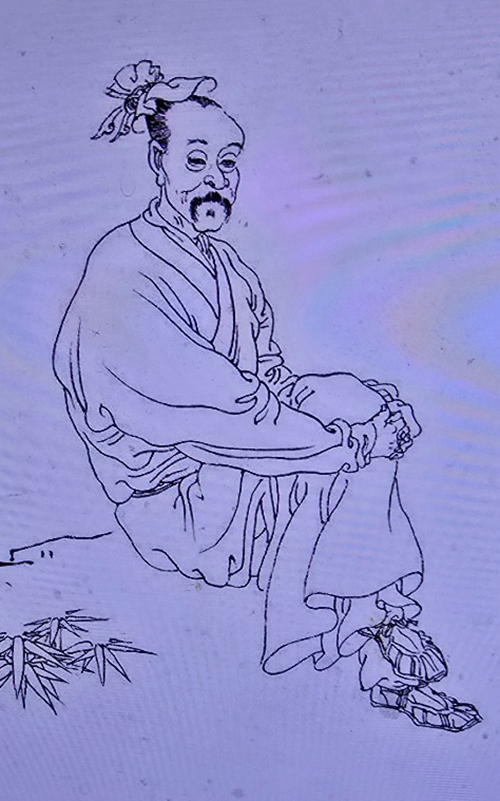
南宋 宮廷畵師馬遠之像
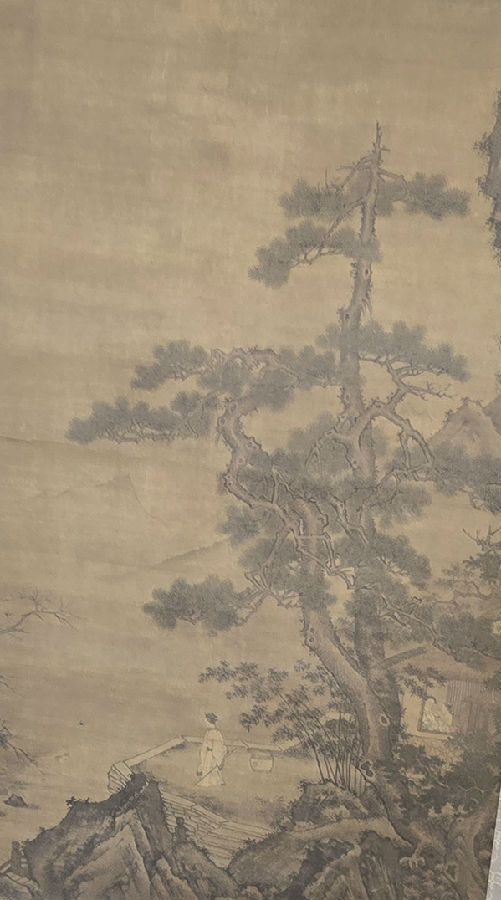
新發現 南宋大家馬遠 山水圖 绢本一部設色 115厘米×163厘米
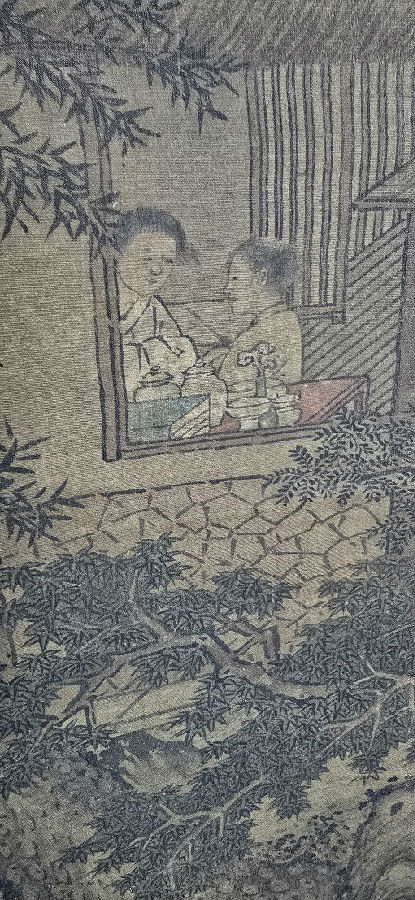
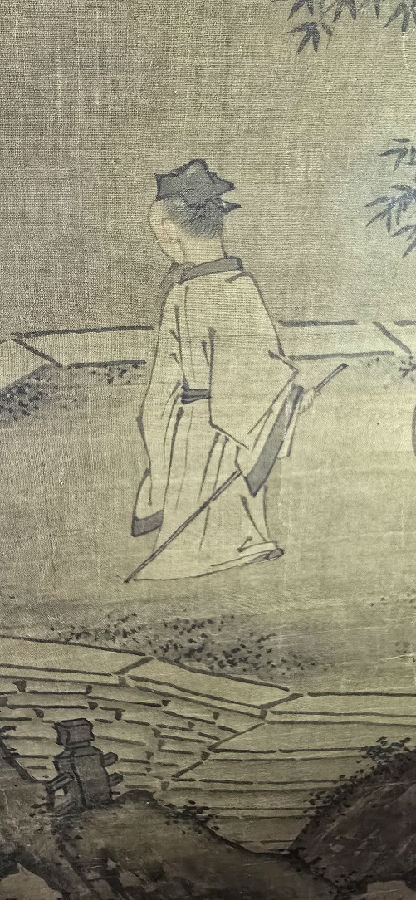
女孝敬圖(部分) 高士圖 (部分)
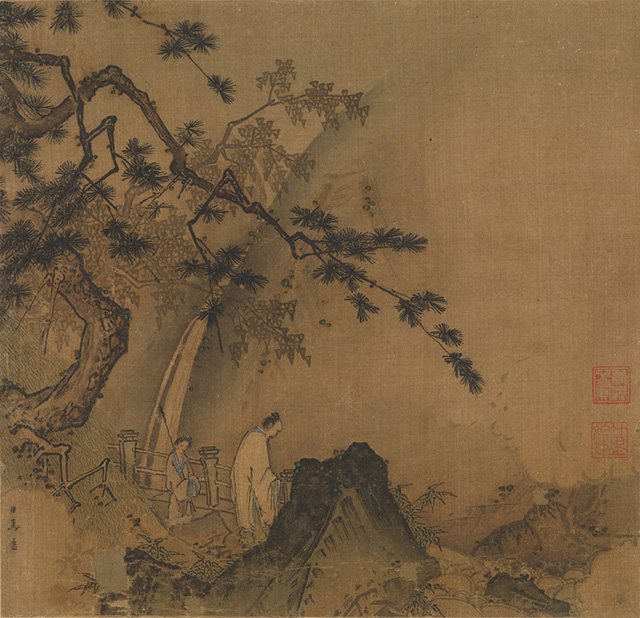
高士 觀瀑圖(美国大都会博物馆 所藏.百度比較資料)
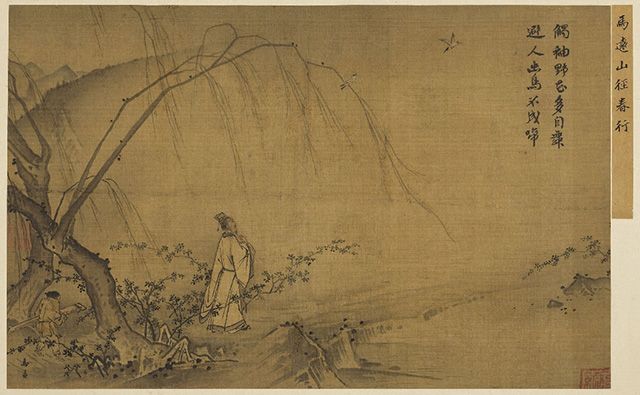
馬遠之 山徑春行圖(台北国立故宫博物院 所藏.百度比較資料)
Discovery of a National Treasure-LevelLandscape Painting by Ma Yuan from the Southern Song Dynasty in Korea
A silk scroll, in color, 115x4075px.Characteristics of the painting style.
Published in the Journal of the KoreanSociety of Chinese Antique Research.
Recently, a national treasure-levellandscape painting by Ma Yuan (1160-1225), one of the four great painters ofthe Southern Song Dynasty, was discovered in Korea. This ancient silk paintingmeasures 115 cm × 163 cm, partially colored, and although slightly faded, is ingood condition. It is currently in the possession of an art expert in GyeonggiProvince.
The discoverer is Lee Jae-joon, an advisorat the Korean Cultural Heritage Research Institute. He determined it to beauthentic because many parts of it are identical to the characteristics of MaYuan's works passed down through various countries. The following is a summaryof the findings.
Ma Yuan was one of the four great paintersof the Southern Song Dynasty. He served as a court painter during the reigns ofEmperor Gaozong and Emperor Xiaozong of the Southern Song Dynasty from the late12th to the early 13th century. Among the court painters of the time, Ma Yuanwas the most favored by the imperial family. Ma Yuan was renowned for hisexquisite skills, especially in portraiture, landscape painting, andflower-and-bird painting. He was also highly praised for pioneering a newpainting style that embodied aristocratic elegance and literati refinement.
This artist's unique choice of subjectmatter and expression of pictorial meaning established a distinctive paintingstyle that dominated the art trends of his time. Particularly noteworthy is hisachievement of what Wang Shizhen of the Ming Dynasty described as "anotherrevolution in Chinese landscape painting." Furthermore, "hiscompositions aimed to evoke poetic emotions in viewers."
Many of his paintings bear inscriptions byEmperor Gaozong or Empress Yang. Most of Ma Yuan's paintings were collected inthe imperial palace or bestowed as gifts upon ministers. He is considered oneof the "Four Great Painters of the Southern Song Dynasty," along withLi Tang, Liu Songnian, and Xia Gui. He studied the style of Li Tang andcompleted the court-style landscape painting of the late Southern Song Dynasty,aiming for poetic expression. This style is characterized by capturing detailsof natural landscapes and often using diagonal composition to create ampleblank space.
"Li, Liu, Ma, Xia" refers to thefour great landscape painters of the Southern Song Dynasty: Li Tang, LiuSongnian, Ma Yuan, and Xia Gui. This title did not originate there; it wasfirst coined by Tang Yin of the Ming Dynasty in his inscription for LiuSongnian's painting "Spring Mountain Immortal." Later, the MingDynasty poet Tu Long also praised "Li Tang, Liu Songnian, Ma Yuan, and XiaGui as the four great masters of the Southern Song Dynasty."
Ma Yuan was proficient in landscape,pavilion, figure, and flower-and-bird painting. He also created numerouspaintings depicting the landscapes of Jiangnan, showcasing the remainingmountains and rivers of the Jiangnan region after the Song Dynasty capitalmoved south. He used unicornuate or semi-circular compositions in theselandscape paintings, concentrating the composition on a specific area of the canvas. By highlighting details, heshowcased the vastness of the land and rivers. This characteristic earned himthe reputation of "Ma the Corner."
His style creates a poetic atmosphere:axe-hewn peaks, bamboo groves rendered with broken brushstrokes, migratorybirds leisurely flying in streams, and the refined taste of contemplative literati.
Ma Yuan's works are highly praised fortheir fusion of culture and painting, creating beautiful and poetic landscapes.His style and themes had a profound influence on later generations of Zhejiangartists, becoming an important model and tradition of the Ming Dynasty's"Zhe School" of painting.
Li said, "Recently discoveredlandscape paintings by Ma Yuan bear a striking resemblance to 'Scholar Viewinga Waterfall' in the collection of the Metropolitan Museum of Art. Inparticular, the depiction of a filial daughter-in-law in the painting reflectsMa Yuan's filial piety. Given that he was appreciated by Emperor Gaozong, whohad a particular fondness for paintings on the theme of filial piety, Ma Yuan'spainting of a filial daughter-in-law in the same thatched cottage building waslikely influenced by Ma Hezhi, a member of the Ma family painting school duringthe same period."
Lee said, "Among the numerous ancientChinese artworks treasured by Korean art collectors, national treasures areconstantly emerging. This shatters the previous notion that Korea onlypossesses fakes, and it is something to be thankful for. I sincerely hope thatthis will inspire Chinese art..."